The Tata group companies are now more valuable than all the listed central public sector undertakings (CPSUs) or companies in the country. The key 20 listed Tata companies ended the 2021 calendar year with a combined market capitalisation of Rs 23.36 trillion, ahead of the 70 listed CPSUs, which had a combined m-cap of Rs 23.2 trillion. In comparison, these CPSUs had a combined market capitalisation of Rs 16.7 trillion at the end of December 2020 against the Tata group firms' combined m-cap of Rs 15.7 trillion.

Will 2022 be a year of contrasting narratives -- one filled with caution and the other with continued optimism?

After dropping to a low of Rs 1,298 apiece, the stock finished at Rs 1,380, its lowest level since November 22, the second day of listing.

'The markets haven't corrected, that doesn't mean that they will only go up and up.'

'In the overall global portfolio, India's weighting has come down in the past seven months.'

'Investing in the stocks of holdcos can be a very efficient and inexpensive way of gaining exposure to the stocks of India's reputable growing business houses.'

'Sebi has to make sure that investor interests are protected and at the same time, there isn't over-regulation so that companies don't get discouraged to list here.'

'They have helped stabilise our market by acting as a counterbalance to foreign funds.'

Star Health and Allied Insurance's Rs 7,250-crore initial public offering (IPO), the third largest this year and eighth largest ever, just about managed to make it despite a poor response from investors, garnering just 79 per cent subscription, forcing the investment bankers to prune offer for sale (OFS) component. This is the second large offering after digital payments major Paytm this year to receive a lukewarm response from investors, a sign that despite the IPO frenzy investors are discerning when it comes to pricing. As Star Health didn't meet the profitability criteria, its IPO required a mandatory 75 per cent subscription from qualified institutional buyers (QIB).

'Any normalisation exercise will bring its share of volatility.'

'I can tell shareholders we're going to be very responsible with our capital, we're going to be absolutely execution focused.'
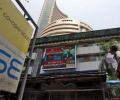
The BSE's arm Asia Index has announced Wipro will replace Bajaj Auto in the 30-share Sensex. The move is part of a semi-annual rebalancing exercise and will take effect when the market opens for trading on December 20. On account of the rejig, Wipro will see buying by passive funds to the tune of Rs1,300 crore, while Bajaj Auto will see selling of Rs 636 crore, estimate analysts.

Sebi also plans to examine if any comments made by company officials or the bankers could have misled investors.

India's top listed companies reported their best-ever quarterly net profit of Rs 2.39 trillion in the September quarter of FY22, up 46.4 per cent year-on-year. The earnings were driven by a big surge in the profitability of banks, non-banking financial companies & insurance (BFSI), oil & gas, and metal & mining firms. The combined net profit of these three cyclical sectors were up 87 per cent YoY to a record high of Rs 1.53 trillion, up from Rs 82,000 crore a year ago and Rs 1.08 trillion in Q1FY22.

Initial public offerings (IPOs) by start-ups are bringing cheer to investors and investment bankers alike. After food delivery company Zomato, Nykaa has issued the fattest pay cheque to the managers of its share sale -- Rs 148 crore, or 2.8 per cent of its issue proceeds of Rs 5,300 crore. In absolute terms, this is the second-highest amount paid to investment bankers for handling an IPO, while in percentage terms, it is the highest for large IPOs (>$300 million) in the last one year, shows an analysis of the data provided by Prime Database, a primary market tracker.

'Today, there is no easy money to be made after the run-up in equities.'

Listed companies' net profit as a percentage of gross domestic product (GDP) has hit a decadal high and is expected to edge even higher over the next two financial years. According to an analysis by ICICI Securities, India's Inc net profit stood at Rs 8.4 trillion, or 4 per cent of GDP of Rs 210 trillion for the trailing 12-month period ending September. This is the highest since financial year 2011-12 (FY12), when it was at 4.6 per cent.

'We expect the bull run to continue until economic growth continues.'

Morgan Stanley on Thursday became the latest brokerage to question the valuations of Indian equities and downgraded them from 'overweight' (OW) to 'equalweight' (EW) and recommended taking some money off the table. "We move tactically EW on India equities after strong relative gains - we expect a structural multi-year earnings recovery, but at 24 times forward price-to-earnings (P/E) we look for some consolidation ahead of US Fed tapering, an RBI hike in February and higher energy costs," Morgan Stanley equity strategists, led by Daniel Blake and Jonathan Garner, said in a note on Asia Pacific markets. The brokerage has upgraded Indonesia to OW, while maintaining an EW stance on China and UW on Taiwan.

'Slower-than-anticipated recovery can be a bigger risk this time than a liquidity-driven event -- at least for India.'
